
- Home
- The Clinic
- Pathologies
- Techniques / Technology
- INUSpheresis®
- Clinical Analysis
- Blog
- Contact
Zero gravity appears to affect certain functions in the immune system, with immune cells unable to adequately protect astronauts, which is why fungi such as Candida albicans become extremely aggressive in microgravity environments.
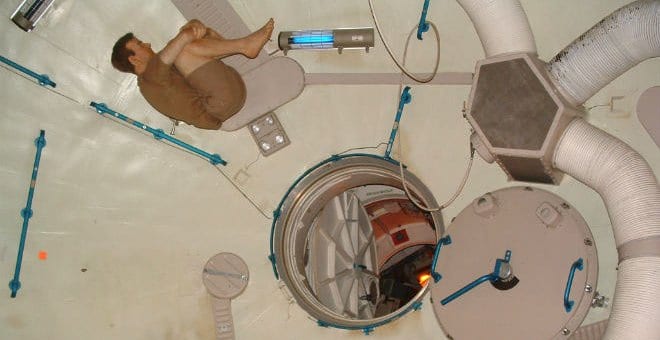
Scientists at the University of Zurich are currently studying immune cells on the International Space Station (ISS) to find out how deep space missions affect the human immune system.
Zero gravity appears to affect certain functions in the immune system, so immune cells become unable to adequately protect astronauts from infections.
One type of immune system cell is the phagocyte, known as a macrophage, which kills and destroys invading bacteria by devouring them.
"Conducting research in space allows us to better understand life on Earth," explains Professor Oliver Ullrich of the University of Zurich's Institute of Anatomy.
"The experiment provides key data that allows us to measure risk in future space flights more effectively."
On April 18, a shipment of UZH immune cells was sent to the International Space Station aboard the SpaceX CRS-3 Dragon spacecraft, in a project called "Mission Cellbox."
Once the cells reached the ISS, the immune cell samples were studied during a three-day experiment to see how the structure and metabolism of phagocytes change in zero gravity, especially their cytoskeleton and molecules, which are important for cell communication.
The SpaceX Dragon capsule will splash down in the Pacific Ocean on May 18, bringing back the samples that have been in space.
In December 2013, researchers from nine US universities, together with NASA, published a study entitled "Spaceflight increases random cell aggregation in Candida albicans" in the journal PLOS ONE, which showed that a common fungus that can cause serious illness in people with weakened immune systems is actually much worse in space.
The fungus, known as Candida albicans, is found on the skin, in the mouth, and in the gastrointestinal, urogenital, and vaginal tracts of 80% of the human population. The fungus also has the ability to travel through the bloodstream to infect the throat, intestines, and heart valves.
Candida albicans becomes more aggressive in microgravity environments, which means it poses a risk to astronauts on space flights. Scientists are therefore trying to see if it is possible to change the behavior of pathogens such as this fungus in space.
