
- Home
- The Clinic
- Pathologies
- Techniques / Technology
- INUSpheresis®
- Clinical Analysis
- Blog
- Contact
The incidence of diabetes mellitus is growing at an alarming rate worldwide. The long-term medical consequences of diabetes include:
Improved glycemic control in patients with diabetes has been shown to reduce the risk of developing and progressing some of these major complications.
Despite the availability of increasingly effective treatment modalities, including insulin analogs and continuous glucose monitoring, a substantial proportion of patients with diabetes are unable to achieve adequate glycemic control. This challenge is compounded by the need to balance improved glycemic control with an increased risk of hypoglycemia (low blood glucose levels), which can cause seizures, coma, and death.
Many experts believe that the best therapeutic option for treating diabetes is an artificial (or closed-loop) pancreas system that can mimic the function of normal pancreatic beta cells, thereby restoring normal metabolic homeostasis without causing hypoglycemia. The design of any system capable of achieving this goal is complex and poses new scientific, clinical, and regulatory challenges.
The term "artificial pancreas" refers to an automated control system designed to supplement or replace the functionally impaired endocrine pancreas in patients with diabetes. Conceptually, an artificial mechanical pancreas consists of inputs (e.g., glucose readings) continuously fed into a controller where a mathematical algorithm applies a set of rules to generate an output (e.g., an infusion pump delivering a fixed amount of insulin). Subsequent information from the inputs could result in adjustments to the output. Other drugs (e.g., glucagon) may be included in the system to counteract the hypoglycemic effects of insulin or to slow the rate of carbohydrate absorption after a meal (incretin-based therapies, for example). Components may be external or implantable and may integrate wireless telemetry to improve communications.
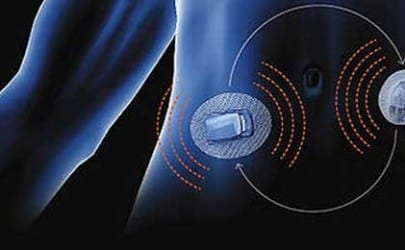
An artificial pancreas can also be entirely biological (e.g., islet transplantation), a mechanical-biological hybrid, or a semi-closed system that involves actions by the patient (e.g., administering a bolus of insulin to the patient before meals). In this post, we will focus on the mechanical artificial pancreas.
In the US, there is currently only one such system that has been approved by the FDA (US Food and Drug Administration), the Biostator1 (Miles Laboratories, Inc., Elkhart, Indiana). However, its large size and sampling and intravenous administration components limit its use to clinical settings.
Approved interstitial fluid glucose monitoring devices use a type of needle, enzyme-based sensors that utilize a glucose oxidase reaction. These devices require calibration using a traditional blood glucose meter, are inserted subcutaneously, and must be removed and replaced periodically. Sensor readings are transmitted to a device such as a pager where an algorithm converts the information to blood glucose equivalent results. Current and previous glucose results are displayed to the user to track glucose concentrations and monitor glucose trends. Limitations of these devices include biological and physical changes at the sensor interface; for example, errors can be caused by an inflammatory response at the insertion site or by mechanical movement of the sensor. There are also time delays in the output signal relative to changes in blood glucose concentrations. Sensor performance is typically poorer at dangerously low blood glucose concentrations, and there are unexplained periods when sensor readings vary significantly from blood glucose readings.
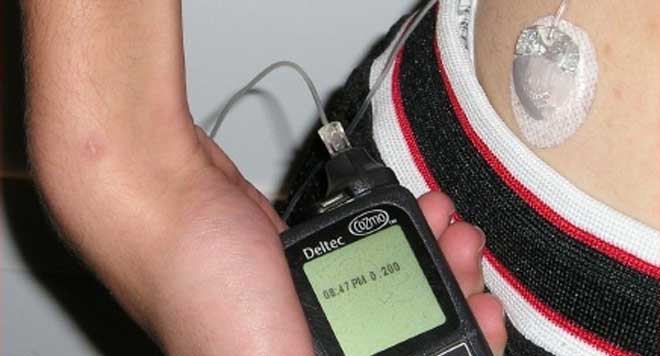
Insulin pumps are often used to provide continuous subcutaneous insulin delivery. Currently approved extracorporeal pumps consist of an insulin-loaded syringe that delivers insulin through a catheter. Continuous infusion mimics the basal function of a real pancreas. Limitations of insulin pumps include slow and variable absorption of insulin into the circulation from the subcutaneous space.
At least in theory, an artificial pancreas could benefit any patient with diabetes who is unable to maintain adequate glycemic control despite optimal medical treatment.
 However, due to safety concerns, the initial development of an artificial pancreas could target a patient population with the greatest need and potential for maximum benefit (e.g., frail type 1 diabetes patients, those who experience frequent hypoglycemic episodes or diabetic ketoacidosis, or those who are unaware of their hypoglycemic status).
It could subsequently be expanded to:
Trials to evaluate an artificial pancreas must be conducted in a safe and controlled environment, such as a Clinical Research Center.
New technologies could have an impact on every element of the artificial pancreas and, in turn, improve the overall functioning of the system. Blood glucose concentration is an important input for the system, but it is not the only variable that can be used. It is possible to measure other outcome variables, such as physical activity, food consumption, the onset of hypoglycemia, and brain metabolic function.
Other sensors are being developed to measure blood glucose indirectly. For example, one technology uses a laser to create microscopic holes through the outer layer of the skin. Other technologies include optical coherence tomography, impedance spectroscopy, boronic acids to make polyacrylamide hydrogels, holographic sensors, and contact lenses to measure glucose [14,15].
A number of non-invasiveproduct developers havebeen working with infrared diffuse reflectance spectroscopy systems. While significant progress has been made, a fundamental signal-to-noise ratio must be optimized, and researchers are working to establish a unique spectral signature for glucose relative to the tissue matrix.
One technology showing significant promise is based on Surface Enhanced Raman Spectroscopy. It seems likely that an advanced version of this sensor could be passed through the skin into the subcutaneous space, in a manner similar to the placement of insulin pump-based catheters. The nanoparticle-based system can provide continuous, direct measurement of glucose concentration.
A company has developed an insulin delivery system that is regulated by glucose concentrations. This "smart insulin" is a once-daily injectable formulation of insulin. It consists of a nanostructured material (hydrogel) that self-assembles from two biomolecular building blocks: a glycosylated insulin-polymer conjugate and a multivalent glucose-binding molecule. Researchers have shown promising results in studying this technology in animals.
An Aragonese company belonging to the Biosalud Group, called Goodday, hasdeveloped a technology in which the diabetic's glucometer connects via Wi-Fi to intelligent software developed by the same company, with the advice of a team of endocrinologists specializing in diabetes, so that as soon as the patient measures their blood glucose, the data "travels" to the software, recording the time, the patient's name, and blood glucose level. The software then sends a message to the patient's cell phone indicating that everything is fine, issuing a warning, or even notifying the treating diabetologist if the values indicate a danger to the patient, so that the doctor can contact and advise the patient directly on what to do. This system will be operational at the beginning of the year and offered by Biosalud to any diabetic who wants this service atBiosalud at home.
Doctors at Maimónides University in Argentina have succeeded in segregating insulin and glucagon again, using the patient's own stem cells. As explained by the director of this research, and of the Center for Research in Tissue Engineering and Cell Therapies (CIITT) at the university, Dr. Gustavo Moviglia, this is the first time in the world that the body has been able to regain a natural source of production and secretion of insulin and glucagon, which are complementary hormones and equally necessary.
Moviglia explains that the tests were carried out using human fat, but without applying them to individuals. "We then used them on animals that we had induced with a condition similar to diabetes. So far, what we are observing is that they supplement the function," clarifies the director.
"Ideally, an insulin-dependent person should be able to stop being insulin-dependent," says Moviglia. "That is the ultimate goal we are pursuing. Hopefully, we will achieve it."
You can watch this video in which Professor Moviglia talks about this research on diabetes.
Professor Gustavo Moviglia has joined Biosalud as an expert consultant in Cell Therapy and Tissue Engineering. For this reason, he visited our city to hold working sessions at Biosalud as part of the agreement between Biosalud and Maimónides University. Iñigo Sánchez has joined Biosalud as director of this project, bringing his extensive experience in healthcare and pharmaceuticals as an expert in regulatory affairs and healthcare management.