
- Home
- The Clinic
- Pathologies
- Techniques / Technology
- INUSpheresis®
- Clinical Analysis
- Blog
- Contact
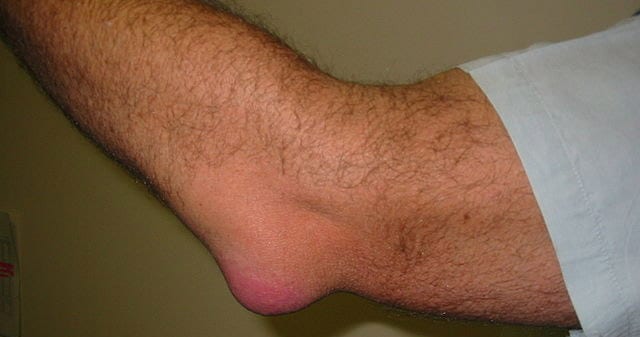
Bursitis is the inflammation or irritation of a bursa. It is a common condition involving inflammation of the soft tissue around muscles and bones, most often in the shoulder, elbow, wrist, hip, knee, or ankle.
A bursa is a small sac filled with fluid that acts as a cushion between a bone and other moving parts: muscles, tendons, or skin. Bursae are found throughout the body.
Bursitis occurs when a bursa becomes inflamed (redness and increased fluid in the bursa).

Bursitis is commonly caused by overuse or direct trauma to a joint. Bursitis can occur in the knee or elbow, for example, when kneeling or leaning on your elbows longer than usual on a hard surface. Tendinitis, on the other hand, is more often the result of repetitive injury or movement in the affected area. These conditions occur more frequently with age. Tendons become less flexible with age and are therefore more prone to injury.
People such as carpenters, gardeners, musicians, and athletes who perform activities that require repetitive movements or put stress on the joints are at greater risk for tendonitis and bursitis.
An infection, arthritis, gout, thyroid disease, and diabetes can also cause inflammation of the bursa or tendon (in the case of tendinitis).
The most current trend, or one of the most current trends, is to treat bursitis with sports physical therapy.
To determine the cause of this problem, your doctor will ask you about your medical history and perform a thorough physical examination. Tenderness along the tendon or its sheath (outer covering), or at a specific point on the tendon, suggests tendinitis.
Most patients do not initially need imaging tests such as X-rays, MRIs, or ultrasounds. Imaging and blood tests are performed only if the problem persists or does not go away. A blood test can help detect an infection. Signs of infection include redness, warmth, and swelling. If bursitis is the result of infection, the fluid must be drained from the bursa quickly.
Bursitis can be caused by an injury, an infection, or a preexisting condition in which crystals can form in the bursa.
An injury can irritate the tissue inside the bursa and cause inflammation. Doctors say that bursitis caused by an injury usually takes some time to develop. The joints, tendons, or muscles near the bursae may have been overused. The injury is usually caused by repetitive movements.
Here are some examples of causes of bursitis, almost all of which are related to sports activities:
The infection that causes bursitis tends to occur in the bursae closest to the skin's surface, such as those near the elbow. A cut in the skin provides an opportunity for bacteria to enter. Most healthy people would not be affected by opportunistic bacteria trying to enter the skin. However, people with weakened immune systems, such as those with diabetes, HIV/AIDS, cancer (treated with chemotherapy or radiation therapy), as well as people taking steroids and heavy alcohol users, would be affected.
People with certain diseases are more prone to crystal formation within the bursa. The crystals irritate the bursa and cause it to swell. Diseases that can cause this condition include gout, rheumatoid arthritis, and scleroderma.
The treatment of bursitis depends on the patient's general condition: age, health status, medical history, and tolerance to certain drugs and therapies.
For example, in conventional medicine, treatment for bursitis caused by a bacterial infection includes antibiotics.
Repeated aspiration of the fluid may be necessary, as well as surgical treatment to remove the infected bursa.
We recommend starting physical therapy treatment if the bursitis becomes chronic.
Why? Because we apply a personalized protocol to not only eliminate the ailment but also prevent its recurrence. At Biosalud, we don't just look at your physical age; using the most advanced methods and our Bioaging technology, we will determine your biological age so that we can treat your ailments in depth. We know that time does not respect what is done without it. That's why we will devote all our knowledge to keeping you in optimal condition at all times.
Sports physiotherapy is the specialty of physiotherapy that treats injuries sustained during sports activities using physical agents.
The increasingly widespread practice of sports in society requires a medical professional who can provide effective solutions to the problems and injuries that this practice entails, without the solution involving side effects or doping complications for the athlete.
Through physical therapy treatments, we treat, prevent, and recover from your ailments, impairments, or functional alterations of the body structure, whether skeletal, joint, vascular, lymphatic, or nervous, in order to maintain an adequate level of health.
