
- Home
- The Clinic
- Pathologies
- Techniques / Technology
- INUSpheresis®
- Clinical Analysis
- Blog
- Contact
A walk in the countryside can change a person's life forever. Increasingly, changes in climate and the movement of pets are encouraging the proliferation of parasitic animals, such as ticks, which can carry viruses or bacteria and transmit diseases by attaching themselves to human skin and tearing blood vessels.
In most cases, these bites are harmless, but the consequences of a disease transmitted by these animals can be so serious that we must take precautions and check our bodies if we have been in contact with nature. It is estimated that ticks can transmit up to 50 diseases, many of them complex and involving co-infections that make them difficult to diagnose and treat. These include:
In recent months, there have been cases of Crimean-Congo hemorrhagic fever in Spain, but the most widespread disease caused by tick bites is Lyme disease, which is bacterial in origin and affects two out of every 100,000 inhabitants in Spain and around 70,000 people each year in Europe.
In most cases, a bite may go unnoticed, which is why we recommend checking your entire body, because ticks are visible while they are attached to the skin. These animals are most often found in moist areas such as the hair, scalp, armpits, groin, back of the knee, ear, or even inside the navel.
Furthermore, if we observe a target-shaped redness of the skin, or an erythema migrans-type rash between 3 and 30 days after the bite, this is already a first symptom of Lyme disease, an initial indication that we should consult a specialist in this disease; a professional with specialized training, such as that provided by ILADS, the international organization that works in prevention, research, and training of professionals in this field.
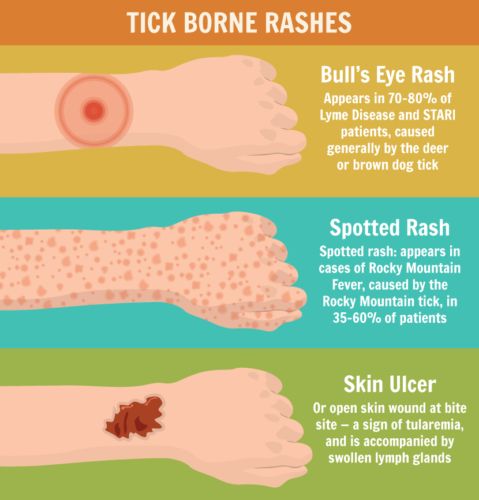
Up to 30 percent of cases of infection do not present these symptoms on the skin, making diagnosis more difficult, especially considering that the other symptoms may appear over time without us being able to associate them with a tick bite, which, moreover, we did not detect at the time.
Initially, in addition to skin redness, the patient may experience flu-like symptoms (fever, fatigue, headache, etc.). Later on, the symptoms worsen, leading to chronic fatigue, joint inflammation, nervous system disorders, heart problems, or liver inflammation.
These symptoms present a nonspecific clinical picture for healthcare professionals, as the patient may not be aware that they have been bitten and there is no apparent relationship between the conditions they present. In addition, Lyme disease often occurs alongside other infections that must be treated.
At Biosalud Day Hospital, we are aware of the reality of this increasingly common disease, and we perform specific Lyme testswhen patients present symptoms commonly associated with this disease. This allows us to rule out or confirm the diagnosis and apply the appropriate treatment for Lyme symptoms, combining allopathic medicine and biological medicine.
