
- Home
- The Clinic
- Pathologies
- Techniques / Technology
- INUSpheresis®
- Clinical Analysis
- Blog
- Contact
Lyme disease is one of the most difficult diseases to overcome, and it appears that in some patients it persists even after following the appropriate treatment for the disease. A new study has revealed that long-term antibiotic use could worsen patients' health, as many volunteers in the study were found to develop side effects.
And apparently, these side effects are not something to be taken lightly, as many patients ended up being transferred to the hospital for respiratory failure, among other symptoms. According to research conducted in the Netherlands and published in the New England Journal of Medicine, the study found no differences between the three treatment groups analyzed.
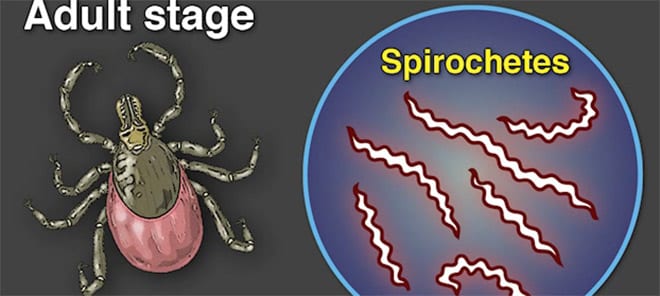
Now researchers are baffled because there is no indicator to show when the disease is chronic or not. This means that people with Lyme disease may require treatment for months or even years. The International Lyme and Associated Diseases Society (ILADS) describes Lyme disease as a disease that requires long-term treatment for an indefinite period of time, but others claim the opposite.
This is the case with its rival and competitor, the Infectious Diseases Society of America (IDSA), which claims that the disease only requires 2 to 4 weeks of treatment for the patient to fully recover. However, the study conducted in the Netherlands suggests that treatment, whether long or short, has serious adverse effects due to the use of antibiotics.
The bacterium known as Borrelia burgdorferi has been identified as the cause of Lyme disease, which is transmitted by the bite of a black-legged tick, according to the Centers for Disease Control. But in a study by the Mayo Clinic and official health institutions in Minnesota, Wisconsin, and North Dakota, researchers discovered a new bacterium called Borrelia mayonii, according to a statement from the U.S. Centers for Disease Control.
The symptoms of Lyme disease can cause fever, headache, rash, and neck pain a few days after infection, and within a few weeks, it can cause arthritis, nausea, vomiting, diffuse rashes, and an increased concentration of bacteria in the blood. Although several types of bacteria are known to cause the disease worldwide, until now Borrelia burgdorferi was the only type known to infect humans in North America.
According to the Centers for Disease Control, more than 300,000 cases of Lyme disease are diagnosed in the course of a year.
The new bacteria mimic the symptoms of Borrelia burgdorferi when the infection first develops, but later on, the new bacteria trigger more severe symptoms. So far, researchers have only been able to detect the new bacteria in the upper Midwest region of the United States. The study led by the Netherlands could help researchers test more "treatments in order to develop a successful treatment that does not endanger the health of Lyme disease patients."
Borrelia mayonii and Borrelia burgdorferi cause fever, headache, rash, and neck pain shortly after infection, and arthritis a few weeks later. "Unlike B. burgdorferi, however, B. mayonii is associated with nausea and vomiting, diffuse skin rashes (rather than a single rash called 'erythema migrans'), and a higher concentration of bacteria in the blood, "the CDC said.
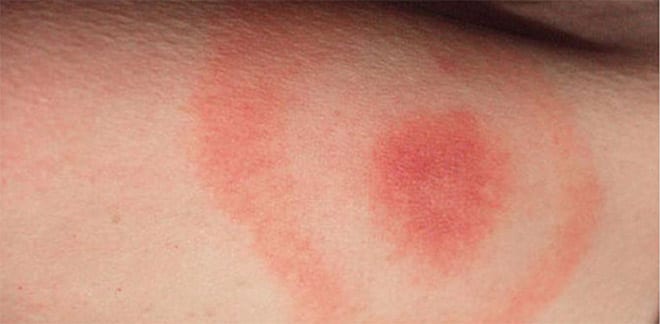
"The newly recognized species was discovered when six of approximately 9,000 samples taken from residents of Minnesota, Wisconsin, and North Dakota suspected of having Lyme disease between 2012 and 2014 were found to contain bacteria that were genetically distinct from Borrelia burgdorferi."
To date, evidence suggests that the distribution of B. mayonii is limited to the upper Midwest of the United States. The new species was not identified in approximately 25,000 blood samples from residents of 43 other states with tick-borne disease collected during the same period, including states in the Northeast and Mid-Atlantic regions, where Lyme disease is common," the CDC added.
Currently, there is a trend among doctors specializing in chronic Lyme disease to administer antifungal treatment, thereby activating the patient's immune system and eliminating the multitude of toxins generated by Borrelia and its companions, always based on biological and integrative medicine.
