
- Home
- The Clinic
- Pathologies
- Techniques / Technology
- INUSpheresis®
- Clinical Analysis
- Blog
- Contact
By BIOSALUD, January 27, 2026

We often think that ticks are only a problem for "hikers" or "dogs," but the statistical reality is alarming. According to data from the European Centre for Disease Prevention and Control (ECDC), cases have tripled in the last decade due to the increase in the number of days with summer temperatures and the expansion of urban green areas.
In this article, from the Biological Medicine Unit at Biosalud Day Hospital, we reveal 10 critical facts about the transmission and prevention of Lyme disease that most people are unaware of.
⚠️ Important Note: This article deals with prevention and mechanisms of transmission. If you or a family member already have compatible symptoms (fatigue, joint pain, brain fog), you do not need prevention, you need clinical action.
See our section here: Specialized Treatment for Chronic Lyme Disease.

80% of infections are not caused by large, visible adult ticks, but by nymphs. A tick in the nymph stage is the size of a poppy seed (less than 2 mm).
They are so small that they can feed on your blood for 3 or 4 days without you seeing or feeling them, as their saliva contains a powerful local anesthetic.
There is a false belief that Lyme disease can only be contracted in high mountains. This is not true. Recent studies in Spain have detected a high presence of ticks infected with Borrelia in:

It is often said that if you remove the tick within 24 hours, there is no risk. This is a dangerous half-truth. While Borrelia bacteria usually take hours to migrate from the tick's intestine to your blood, if the tick is co-infected with other pathogens (such as viruses, other bacteria, or Rickettsia), transmission can occur within minutes.
In addition, if the tick is handled incorrectly (squeezed), it can instantly "vomit" its stomach contents into your bloodstream. They should be removed with special hooks.
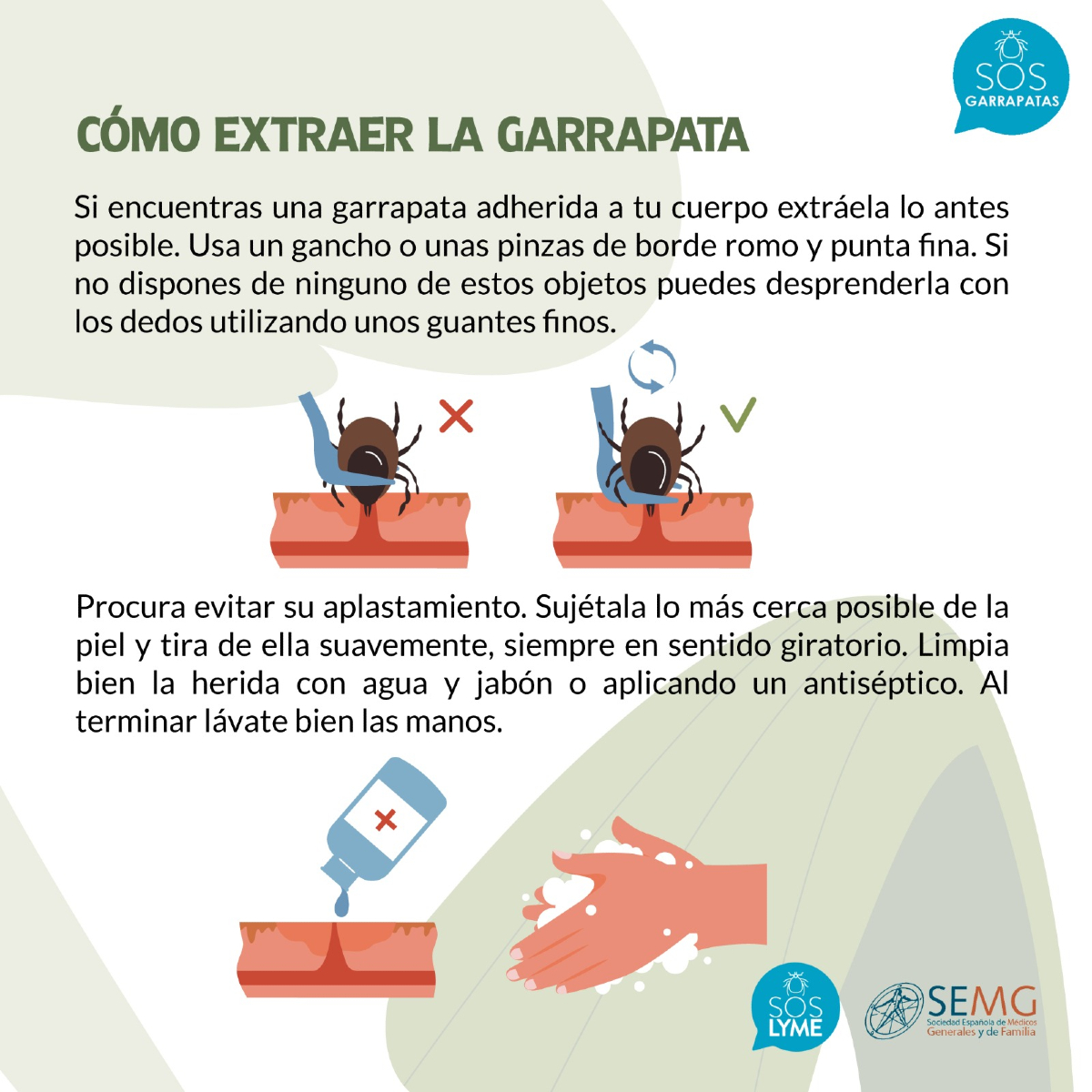
Recommended tool: Tick removal hooks

Environmental health experts always recommend wearing white or very light colors (beige) when going out into the countryside.
The reason? It's not that the color repels the insect. It's that, on black pants, a 1-millimeter nymph is invisible. On white pants, it's a moving black dot that you can remove before it reaches your skin.
Pro tip: Tuck your pants into your socks. Aesthetically questionable, but medically it's the most effective barrier.
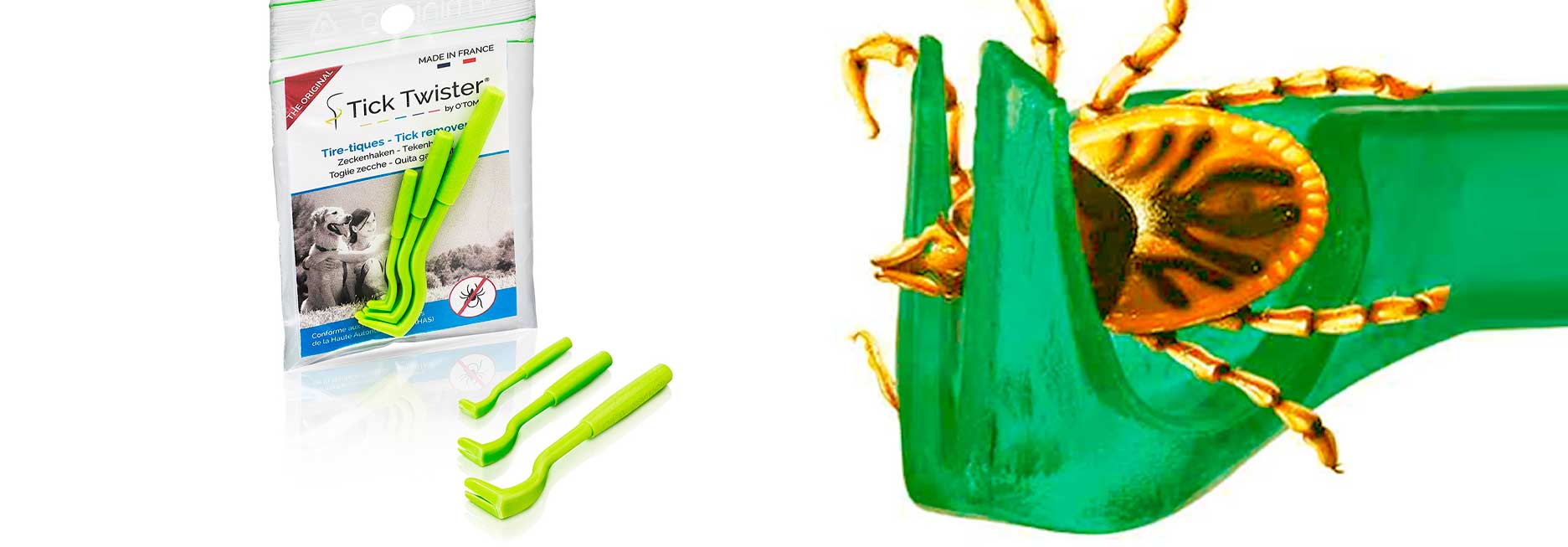
If you find a tick attached, NEVER use oil, petroleum jelly, alcohol, nail polish, or heat (cigarette) to "drown" it or make it come off on its own.
Why? When feeling suffocated or attacked, the tick undergoes a spasm and regurgitates its internal fluids massively into your body, exponentially increasing the risk of infection.
Correct method: Use fine-tipped tweezers, grasp the tick as close to the skin as possible (by the head, not the body) and pull gently upward with steady pressure.
Forty percent of infections in domestic settings occur because pets bring vectors into the home. Dogs and cats act as "magnets."
The tick climbs onto them, does not immediately attach itself, and when the animal shakes itself off on the sofa or lies down on your bed, the tick jumps onto the human.
Prevention: Check your pets before entering the house, not after.
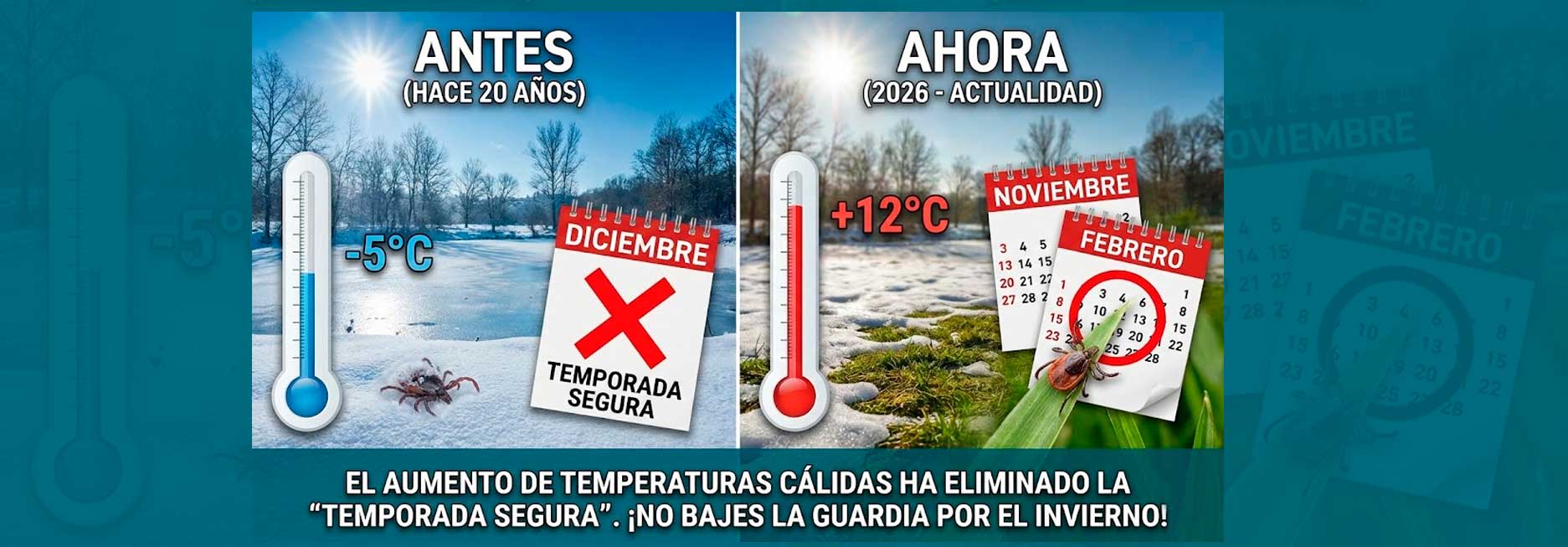
Twenty years ago, the risk was limited to spring and summer. In 2026, with increasingly mild winters, ticks remain active almost all year round. Bites and active infections have been documented in months such as November and February in parts of southern Europe. Don't let your guard down in winter.
A tick is not just a carrier of Lyme disease (Borrelia). It is nature's "dirty syringe." A single vector can simultaneously transmit, among others:
When returning from a walk, a visual check is mandatory. But we tend to look at our arms and legs. Ticks seek out moist, warm areas with thin skin.
The mandatory checklist:
Although it is a subject of intense scientific debate, there is evidence of transplacental transmission (from mother to fetus during pregnancy). If a pregnant woman contracts Lyme disease, the bacteria can cross the placenta. Therefore, prevention in pregnant women must be extreme. A pregnant woman who becomes infected with Lyme disease has an 80% chance of infecting her fetus. A woman with Lyme disease has a 20% chance of infecting her fetus.
Note: Although sexual transmission and other forms of transmission (mosquitoes, spiders, fleas, lice) are being investigated, current evidence points to ticks as the undisputed and most frequent vector.

If, despite taking precautions, you do get stung, follow this medical protocol to minimize damage:
Prevention is key, but early diagnosis saves lives. If you suspect you may have an old infection or your symptoms are not improving:
