- Home
- The Clinic
- Pathologies
- Techniques / Technology
- INUSpheresis®
- Clinical Analysis
- Blog
- Contact
Angina pectoris is caused by partial obstruction of the coronary arteries due to the build-up of cholesterol plaques inside the arteries, a phenomenon known as atherosclerosis.
Angina pectoris manifests itself as pressure or pain in the chest, usually on the left side, which occurs regularly with physical activity or after heavy meals.

Symptoms can usually be treated with lifestyle changes, medications, or procedures that open narrowed arteries and improve blood flow.
Refractory angina is a chronic disease characterized by the presence of angina caused by coronary insufficiency in the presence of coronary artery disease that cannot be controlled by a combination of medical therapy, angioplasty, and coronary bypass surgery. The presence of reversible myocardial ischemia must be established surgically as the cause of the symptoms. Chronic angina is defined as lasting more than 3 months.
This refers to severe chest pain caused by coronary artery disease that cannot be relieved by coronary intervention, coronary revascularization surgery, and optimal medical treatment.
Angina is a symptom, and a symptom is a sensation that something is happening in the body. One of the problems for those who suffer from angina is that the internal organs (such as the heart, lungs, intestines, and kidneys) are not very efficient at communicating to the brain what is happening.
To improve blood flow, the following common surgical procedures are available:
Some patients with refractory chronic angina are not candidates for surgical or percutaneous revascularization and, despite receiving optimal medical management, still experience severe episodes of angina. In these cases, electrical stimulation is used. The spinal electrical stimulator is a neuromodulator that is used as an alternative treatment in these patients.
Spinal cord stimulation is a minimally invasive and reversible technique that uses electrical neuromodulation via an electrode implanted in the epidural space. It appears to be an effective and safe treatment for refractory angina.
Since the development of coronary revascularization and drug administration has led to improved survival rates following a coronary event, it seems likely that the number of patients who remain severely disabled due to refractory angina will increase.
Today, most patients with coronary artery disease can be adequately treated with revascularization and antianginal medications. However, some patients remain resistant to these treatments, or are not good candidates for percutaneous intervention, surgical revascularization, or additional procedures. Some patients with significant intermittent angina show normal coronary arteries on angiography. This latter condition is known as "microvascular angina" or "cardiac syndrome X" and is characterized by typical chest pain with ST-segment depression on the exercise electrocardiogram.
Treatment options that have emerged for refractory angina include:
Neuromodulation, and SCS, can be defined as the electrical or chemical modification of the nervous system that changes actual or perceived neurotransmission and the response to a stimulus or disease. SCS is a minimally invasive technique in which electrodes are implanted in the epidural space to stimulate the dorsal columns of the spinal cord by passing an electrical current.
Since the first report of SCS as a treatment for angina pectoris was published in 1987, a large number of subsequent clinical trials and systematic reviews have demonstrated the clinical efficacy of SCS in angina pectoris in producing an anti-ischemic effect, symptomatic relief, and improvements in functional status and quality of life.
A recent meta-analysis revealed similar outcomes and lower healthcare costs with SCS compared to percutaneous coronary revascularization surgery and laser myocardial revascularization for the treatment of refractory angina.
Potential explanations for the antianginal and anti-ischemic effects of SCS include direct pain blockade, reduced oxygen consumption, decreased sympathetic tone, redistribution of myocardial blood flow from non-ischemic to ischemic areas, possible improved coronary microcirculation blood flow, possible increase in beta-endorphin levels, and modulation of intracardiac neurons. However, SCS remains underutilized, possibly due to its unique and only partially understood mechanism of action, as well as the rapid development of transluminal revascularization procedures. Reluctance to use SCS for refractory angina may also stem from concerns that this technique only treats pain without affecting ischemia, thereby masking acute myocardial infarction. However, it has been reported that SCS does not mask myocardial ischemia pain as a warning sign for infarction.
In conclusion, patients with refractory angina suffer from severe symptoms and impaired activities of daily living. Spinal cord stimulation could enable them to experience pain reduction and improved quality of life.
In early February 2015, a small study conducted by Dr. Shmuel Banai and his interventional cardiology team at the Sourasky Medical Center in Tel Aviv, Israel, showed that a device called the Receptor brings relief to people with refractory angina.
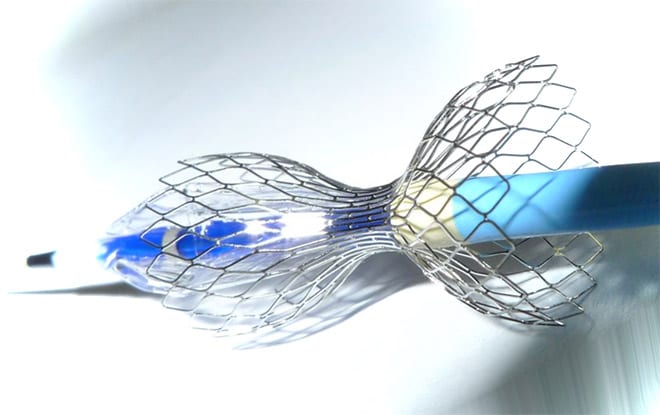
The device his team studied, called Reductor, is already approved in Europe but not yet in the United States. It is similar to a stent, a device that doctors commonly implant to prop open blocked arteries in the heart. But the Reductor is shaped like an hourglass, and instead of being placed in an artery, it is implanted in a large vein in the heart to alter blood flow out of the heart.
This helps maintain more oxygen-rich blood circulating in the parts of the heart muscle that need it.
