- Home
- The Clinic
- Pathologies
- Techniques / Technology
- INUSpheresis®
- Clinical Analysis
- Blog
- Contact
The 3 main types of diabetes are characterized by the body not being able to produce enough of the hormone insulin or the body's inefficient use of insulin.
Insulin is a hormone that is manufactured in the pancreas and is a key for glucose from food to move into the body's cells, where it is converted into energy for muscles and tissues to function properly.
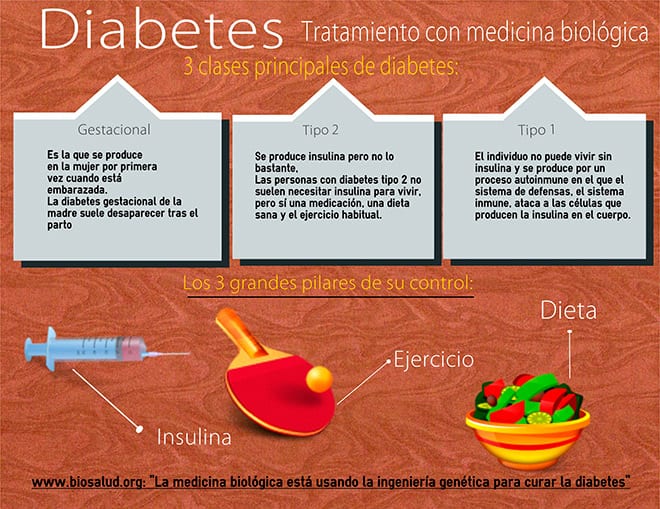
There are three main types of diabetes:
Type 1 diabetes implies that the individual cannot live without insulin and is caused by an autoimmune process in which the defense system, the immune system, attacks the cells that produce insulin in the body. This disease can develop at any age but tends to affect children and young adults more. A person with type 1 diabetes will die if they do not have insulin. The cause is unknown.
Some of the most commonly known symptoms of type 1 diabetes are frequent urination, thirst, unchanging appetite, tiredness, weight loss and blurred vision.
Healthy eating, sports and close medical control are key for individuals with type 1 diabetes to lead a normal life.
This is the most common type of diabetes, which can go unnoticed by the person for years, while the health status of the organism deteriorates. In this case, insulin is produced but not enough. In many cases, it is diagnosed when the evidence is already clear.
Some of the causes of type 2 diabetes are:
People with type 2 diabetes do not usually need insulin to live, but they do need medication, a healthy diet and regular exercise.
It occurs in women for the first time when they are pregnant. Fortunately, it usually occurs late in pregnancy, so the baby will be at less risk than if the mother had type 1 or 2 diabetes before.
Gestational diabetes in the mother usually disappears after delivery. But keep in mind that women who have had GDM have an increased risk of developing type 2 diabetes over time.
When diabetes becomes complicated, health complications can occur, which we will summarize in the following points:
Insulin was discovered by Frederick Banting and Charles Best in 1921 and provided life and hope for people with type 1 diabetes. Major advances have been made in research and development, creating human insulin through genetic engineering.
In this sense, Biosalud has collaborated with Professor Gustavo Moviglia in Cell Therapy and Tissue Engineering projects, as a result of the agreement between our clinic and Maimonides University.

Doctors at the Maimonides University in Argentina have succeeded in re-establishing insulin and glucagon secretion, based on the body's own stem cells. As Dr. Gustavo Moviglia explains, this is the first time in the world that the body has regained a natural source of insulin and glucagon production and secretion, which are complementary and equally necessary hormones.
In addition, an Aragonese company related to Biosalud, called Goodday, has developed a technology in which the glucometer of the diabetic is connected via wifi with an intelligent software that has been developed by the same company, with the advice of a team of endocrinologists specializing in Diabetes, so that as soon as the patient measures his blood glucose, the data travels to the software, The software then sends a message to the patient's cell phone indicating good progress, a warning or even a warning to the treating diabetologist, in the event that the values indicate a danger to the patient, so that the doctor can contact the patient and advise him/her directly on what to do. This system will be operational at the beginning of the year and will be offered by Biosalud to any diabetic who wants this service in Biosalud at home.